Face Cloning in AI: ChatGPT & Gemini vs Leonardo and Fal.ai
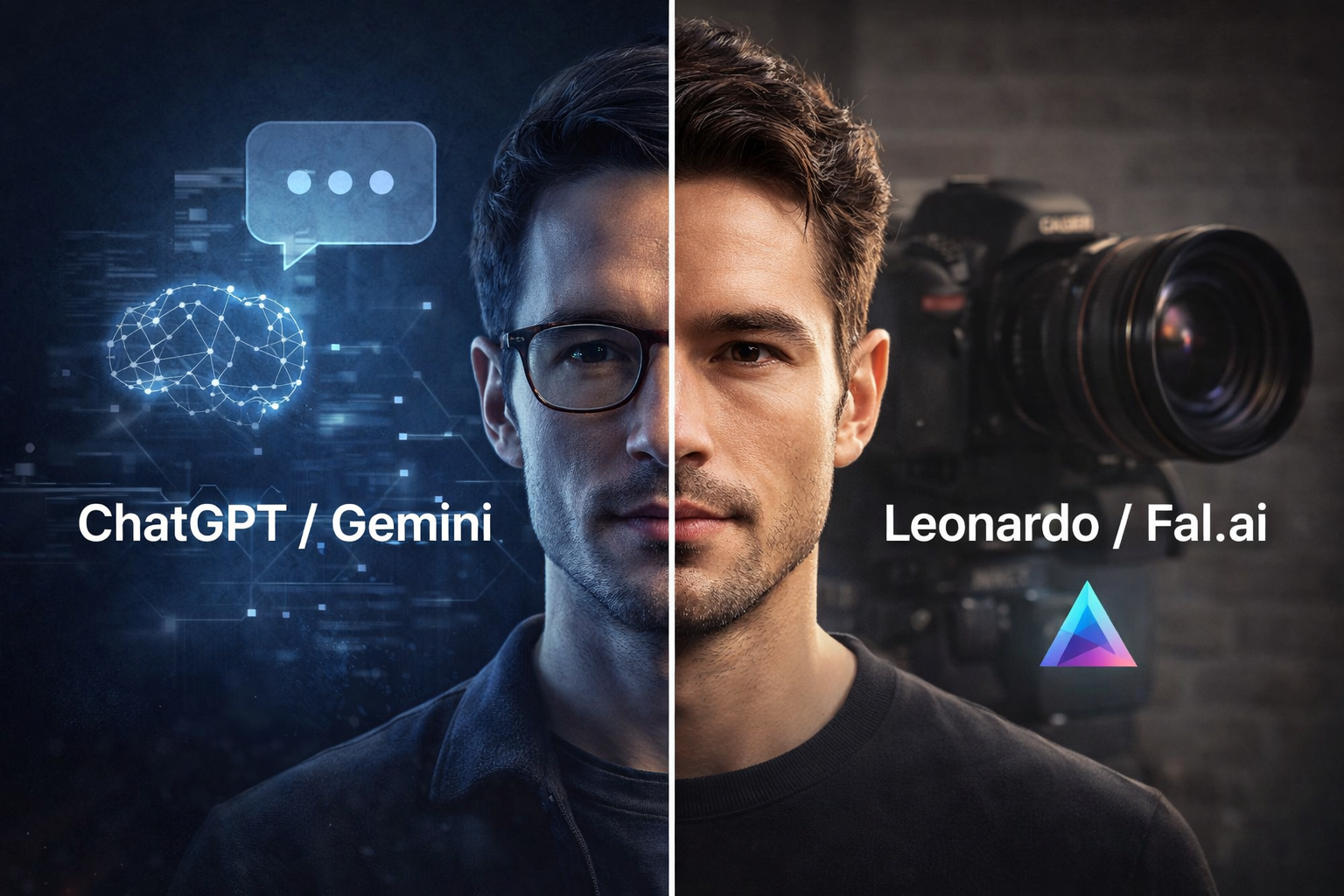
If you’ve seen creators casually say “I cloned my face with AI”, chances are they’re talking about very different technologies under the same label.
Not all face cloning is the same — and confusing the tools leads to false expectations, frustration, and sometimes broken trust with an audience.
1. What People Think Face Cloning Means
Most people imagine uploading a photo and instantly becoming a perfectly replicated digital version of themselves. That expectation only applies to image-generation and model-training tools — not conversational AI.
2. ChatGPT & Gemini: Identity-Free Intelligence
ChatGPT and Gemini are language-first systems. They don’t store faces, recreate likenesses, or generate photorealistic versions of you.
What they do clone is how you think — your tone, decision patterns, and expression style. That’s voice cloning, not face cloning.
3. Leonardo & Fal.ai: Visual Model Training
Leonardo and Fal.ai train visual models using your uploaded images. They learn facial geometry, lighting behaviour, and proportions to reproduce your appearance across scenes.
4. The Clean Breakdown
| Feature | ChatGPT / Gemini | Leonardo / Fal.ai |
|---|---|---|
| Clones your face | ❌ No | ✅ Yes |
| Clones your voice / tone | ✅ Yes | ❌ No |
| Generates images | ❌ No | ✅ Yes |
| Stores facial data | ❌ No | ⚠️ Model-dependent |
| Best for creators | Messaging, strategy, systems | Visual branding |
5. Why Creators Confuse the Two
Because both feel personal — but in different ways. One feels like clearer thinking. The other feels like being everywhere at once.
6. The Smart Creator Approach
Use language models to scale your mind. Use image models to scale your presence. They are powerful together — but not interchangeable.
7. Final Thought
AI doesn’t replace you. It amplifies you. Used well, it removes friction. Used poorly, it erodes trust.